Shenandoah National Park: Exploring the Blue Ridge Mountains
While our trip to Virginia did revolve around the ultramarathon race, we planned it in conjunction with a trip to the beautiful Shenandoah National Park. We selected this national park because it is very baby friendly with a simple road structure, easy short hikes, and accessible facilities. We wanted Madelyn’s first national park to go as smoothly as possible.
Shenandoah is a long, vertical park about 105 miles long from north to south and 1 to 13 miles wide at various points. Despite its narrow structure, it covers about 200,000 acres.
Right down the middle of the park is Skyline Drive, which was built by hand in the 1930s by young men from the Civilian Conservation Corps (CCC). They were paid a base salary of $30 per month, of which $25 was sent home and $5 was kept by the worker, under program rules. Today, that would equate to roughly $750 per month. Although it seems very low, this was considered an attractive offer for those coming out of the Great Depression.
Skyline Drive is a winding road with tons of wildlife and hikers, so a strict speed limit of 35 mph is enforced. With 75 scenic overlooks and dozens of trailheads, there is plenty to do.
Unfortunately, we did have rainy days. We stayed flexible with our schedule and worked around the rain and Madelyn’s naps. For most of the drive, Madelyn would sleep as we stopped on the side of the road to peek at the overlooks. But, we couldn’t do this all in one day. We divided the Skyline Drive into three sections:
Day 1: Start at the Rockfish Gap Entrance and end at the Swift Run Gap Exit
Day 2: Start at the Swift Run Gap Entrance and end at the Thornton Gap Exit
Day 3: Start at the Thornton Gap Entrance and end at the Front Royal Exit.
We started the drive from the bottom of the park because my race was closer to the southern end. However, we liked this because fewer people drive from south to north. It makes for more open roads and fewer people at the entrance gate.
I would also like to note that we had two Airbnb locations: one near Harrisonburg and one in Luray. The park is so long that it made sense to book a second location to avoid extra hours of driving.
While some of our hikes were limited by having a baby with us, I wanted to share some of my favorite parts of the trip. If you have any questions or need help planning your trip, do not hesitate to reach out.
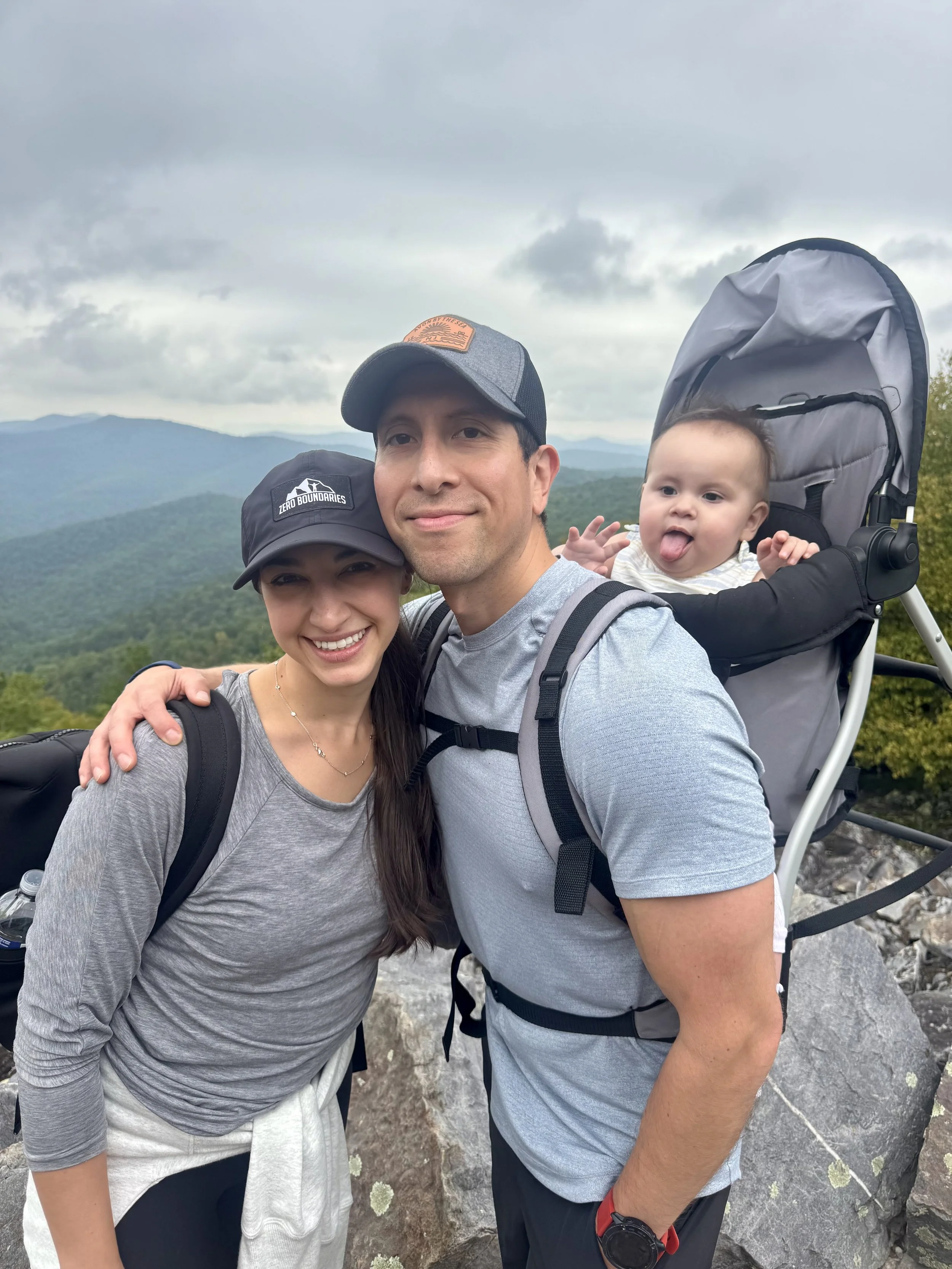
Black Rock Summit: Family picture at the viewpoint of the hike. Madelyn was enjoying that fresh mountain air.
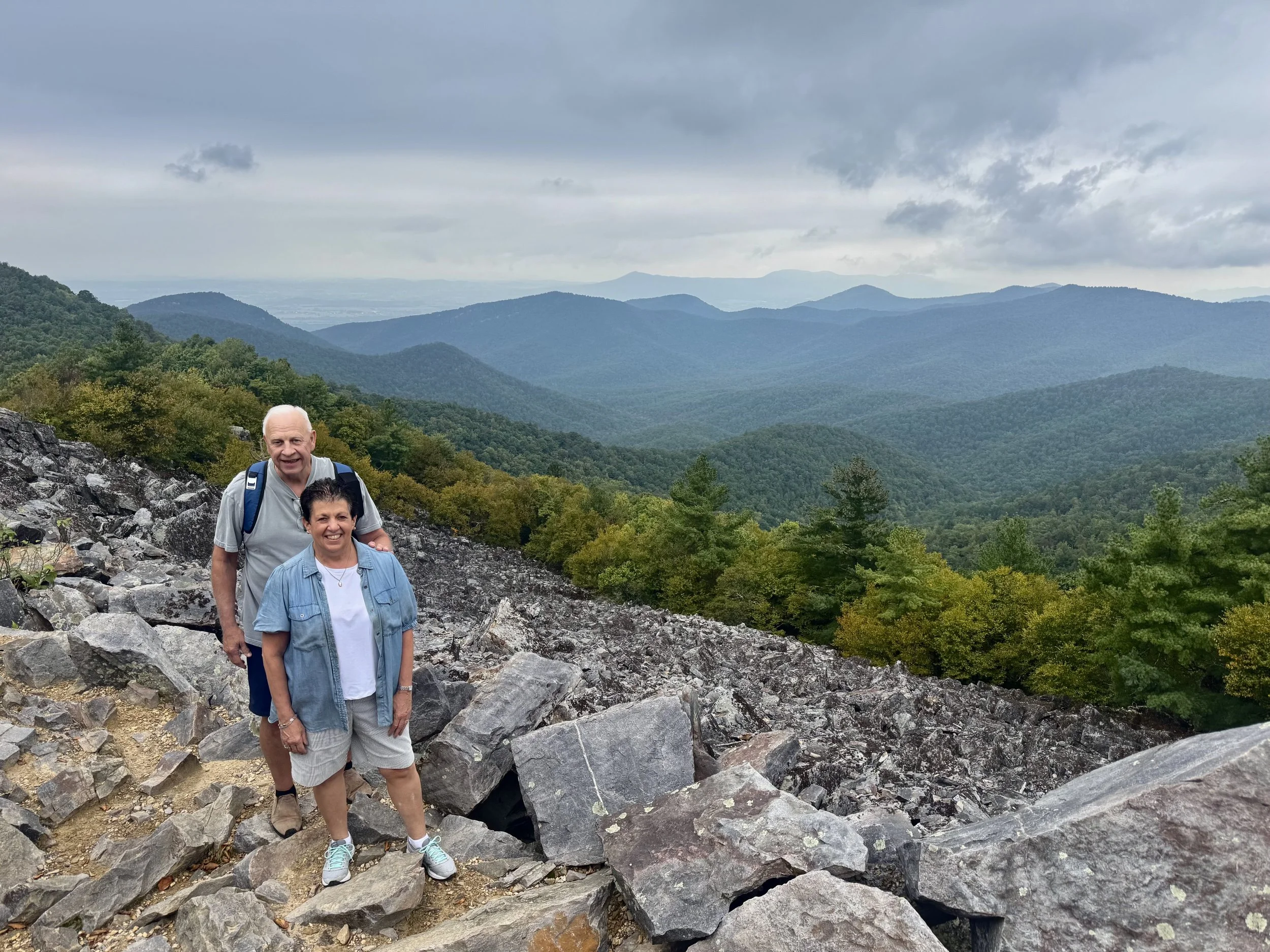
Black Rock Summit: My in-laws joined us for the hike. Proud of them!
Black Rock Summit
Our first hike in the park was Blackrock Summit via Trayfoot Mountain and Appalachian Trail. It was a 1.2 mile trail with 190 feet of elevation gain. It was a perfect start for Madelyn.
Most of the trail is in the forest with tree coverage from the sun or rain. The viewpoint can be dramatic as there’s a sudden break from the vegetation into a panoramic view of the mountains. Just watch your step because it can get very rocky.
At the top of the mountain, there is a lot of broken quartzite. This rock was formed millions of years ago when sand was exposed to extreme heat and pressure as tectonic plates collided. The fusion created this dense and durable rock.
As the tectonic plates moved, they pushed this rock up to the surface and exposed it to the elements, such as ice. Although quartzite is harder than steel, it is very brittle. That is why you see a lot of broken pieces that don’t seem to weather away.
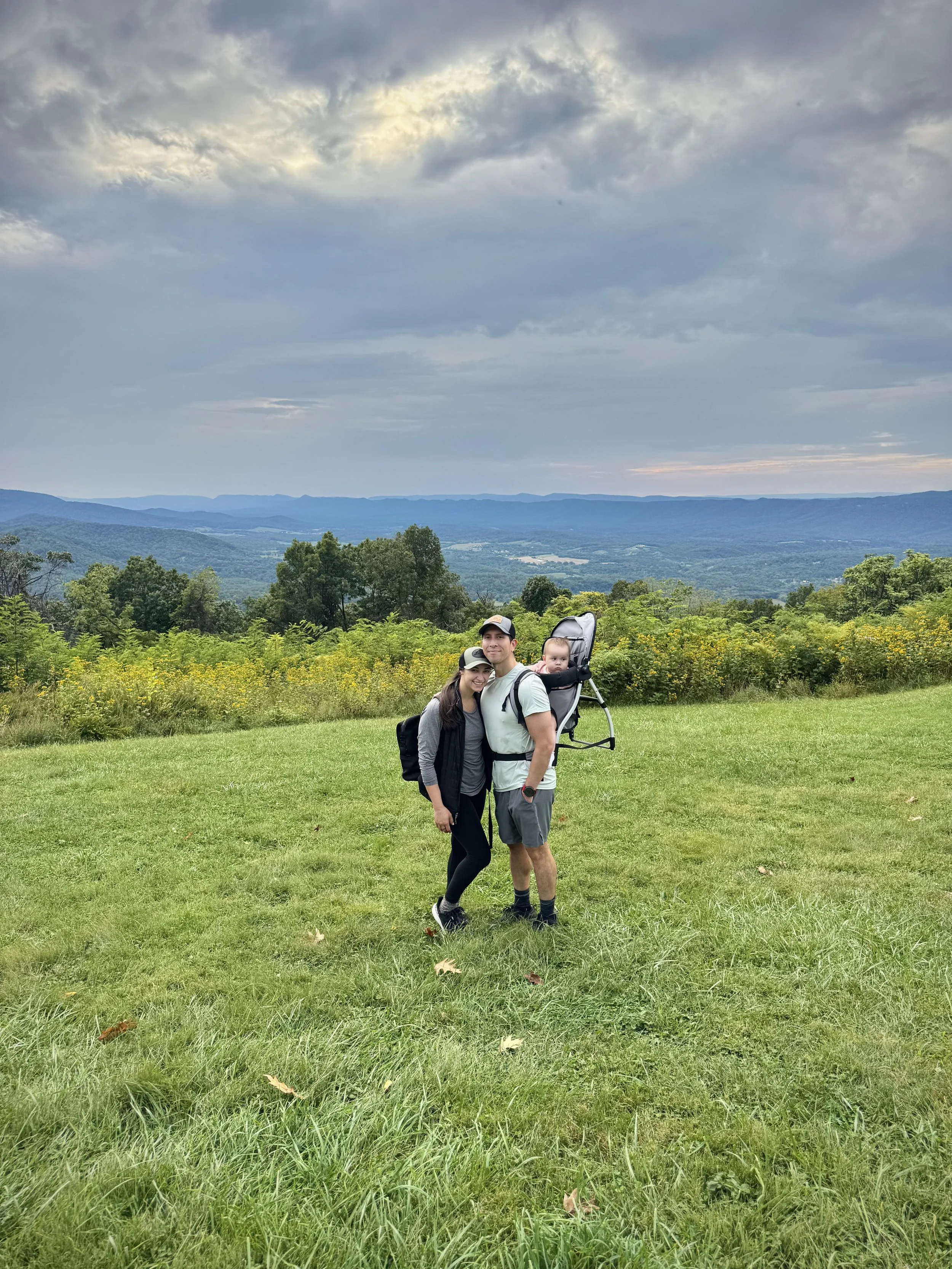
Fox Hollow Trail: Near the trailhead parking lot, there is an easily accessible viewpoint.

Fox Hollow Trail: Madelyn mesmerized by the yellow wildflowers.
Fox Hollow Trail
Fox Hollow Trail is a 1.3 mile loop trail with 130 feet of elevation gain conveniently located near the Dickey Ridge Visitor Center. Right before the hike, we stopped by the visitor center to use the bathroom, check out the gift shop, and appreciate their informative exhibits. Right by the visitor center, there is a grand viewpoint, which we saved for the end of the hike.
The trail is a very simple and peaceful hike in the woods. There were no major viewpoints along the actual trail. Instead, we ran into a historic cemetery of the Fox family.
The Foxes were a pioneering family who settled in the region starting in the 1800s. They built log homes, raised livestock, and lived among the rugged mountains. Sadly, when the federal government established the national park in the 1930s, the family was forced to move out. In fact, over 400 families were forced to abandon their land through eminent domain.
At the very end of the hike, we went back towards the Dickey Ridge Visitor Center where we took a picture with the beautiful western views overlooking the Shenandoah Valley.
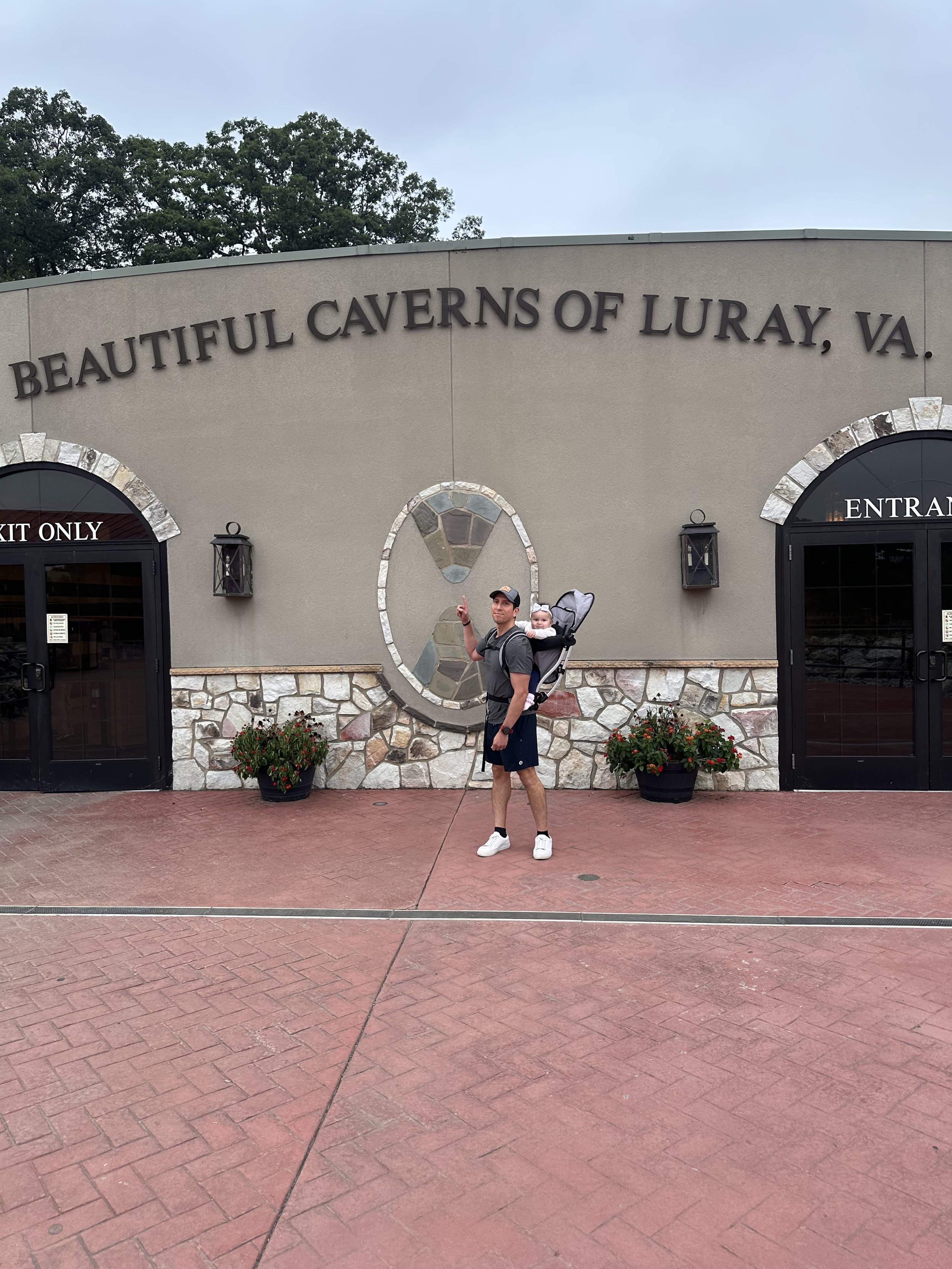
Luray Caverns: The entrance and exit.
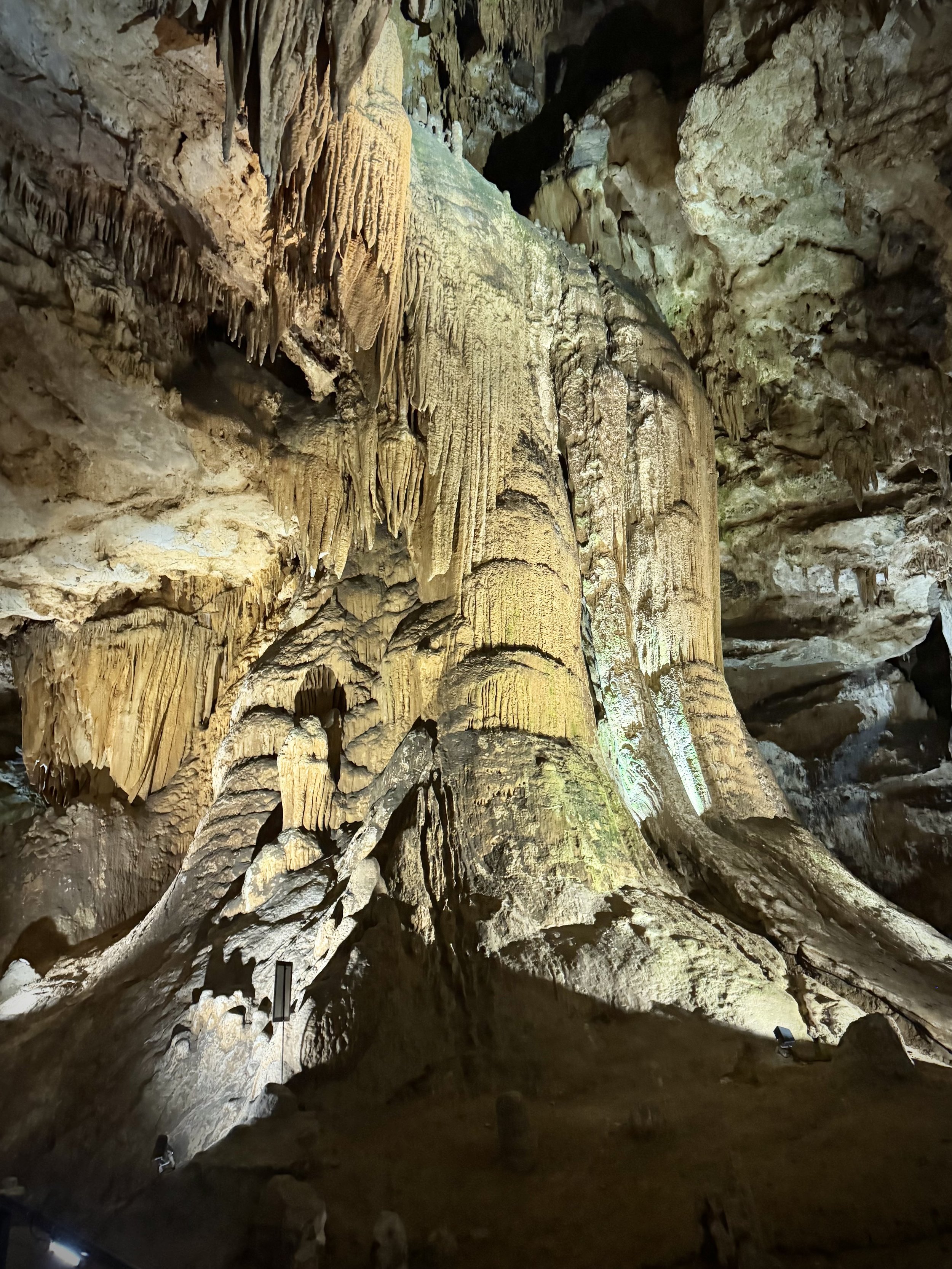
Luray Caverns: The rock formation called the Giant Redwood.
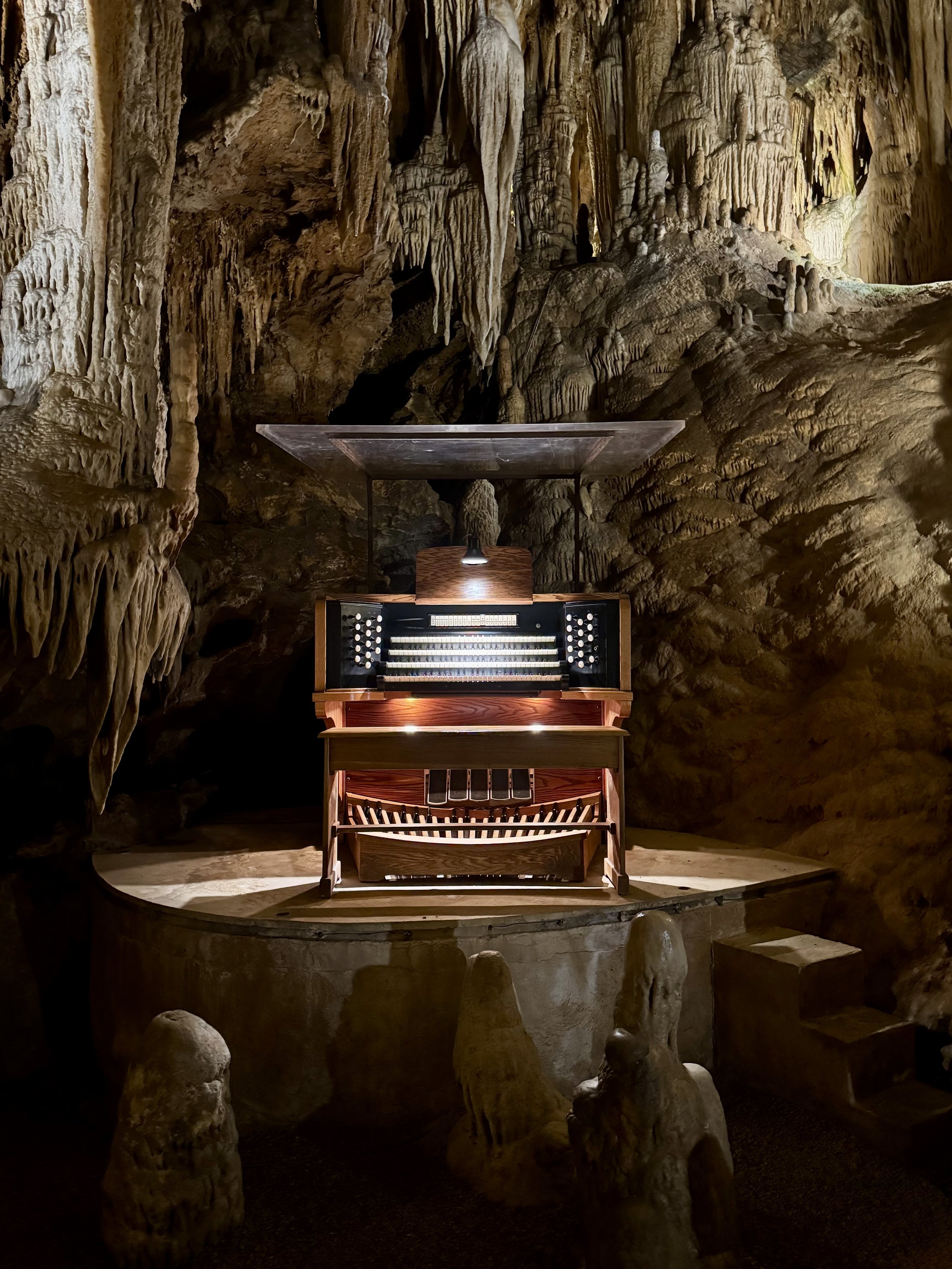
Luray Caverns: The Great Stalacpipe Organ, widely recognized as the world's largest musical instrument.
Luray Caverns
On the rainiest day, our family decided to visit the Luray Caverns right in the Shenandoah Valley (outside of the national park). This is the largest cavern system in the eastern United States with wide, open spaces and rare, colorful formations.
We purchased tickets on-site for a self-guided tour of the 1.25 mile loop. The paved path had no steps, a handrail, and very good grip, which made the wet ground easy to walk on. There was also plenty of room on the one-way path to pass each other.
As we made our way through the dark caverns, we were in awe of the rock formations that popped in the dramatic lighting.
I loved the Dream Lake, which was a pool of shallow water that created an optical illusion of a large room by reflecting the stalactites (rock formations) hanging from the ceiling above.
I was also very impressed with the Giant Redwood (picture above). This rock formation stands 40 feet high and 120 feet in circumference. It’s also estimated to be over 7 million years old.
Maybe the most popular (and random) attraction was the Great Stalacpipe Organ. This is the world's largest musical instrument, which uses electronic mallets to gently tap surrounding stalactites across 3.5 acres to create music. The noise is initiated by pressing a key on the organ. This sends a low-voltage electrical signal through the miles of wires that are hanging on the cave ceiling. Attached to these wires are those electronic mallets. We were lucky enough to hear this in person!
This was a great visit outside of the park. We did our best to appreciate all the views. However, we had to walk fast because Madelyn soon realized that her voice echoed in the caverns. She found that quite entertaining.
Found this interesting? Sign up to my free weekly newsletter for more.