Grindstone 100K: My First DNF
Every ultramarathon runner eventually faces the letters DNF (Did Not Finish) at some point in their running career. This means that a runner started a race, but was not able to cross the finish line due to injury or withdrawal. Last weekend was my turn to face that result.
It did not come as a complete surprise. There were some red flags leading up to the race.
A Few Days Before the Race
Before most ultra distance races, I tend to feel sick. This is not an unusual phenomenon. When a runner is doing high mileage training weeks, it can be very taxing on the body. Cortisol, a stress hormone, increases and the body runs on adrenaline. Cortisol does an excellent job of acting as an anti-inflammatory, suppressing the immune system and masking the fatigue and any potential sickness.
This seemed to happen right before the Grindstone 100K. I was running well and feeling great for most runs. As the mileage dropped, I started to feel some normal aches and pains as my body was finally addressing the recovery it needed.
On Monday, five days before the race, I started to feel some heavy fatigue. The next day, I felt like my body was fighting some small bug so I prioritized sleep. On Wednesday and Thursday, that feeling of malaise was holding steady. I was certain it would subside by the race on Saturday.
On Friday, the day before the race, I had a terrible headache and body aches. I did all I could to rest that evening so I could be in good shape for a 6:00 AM race the next day.
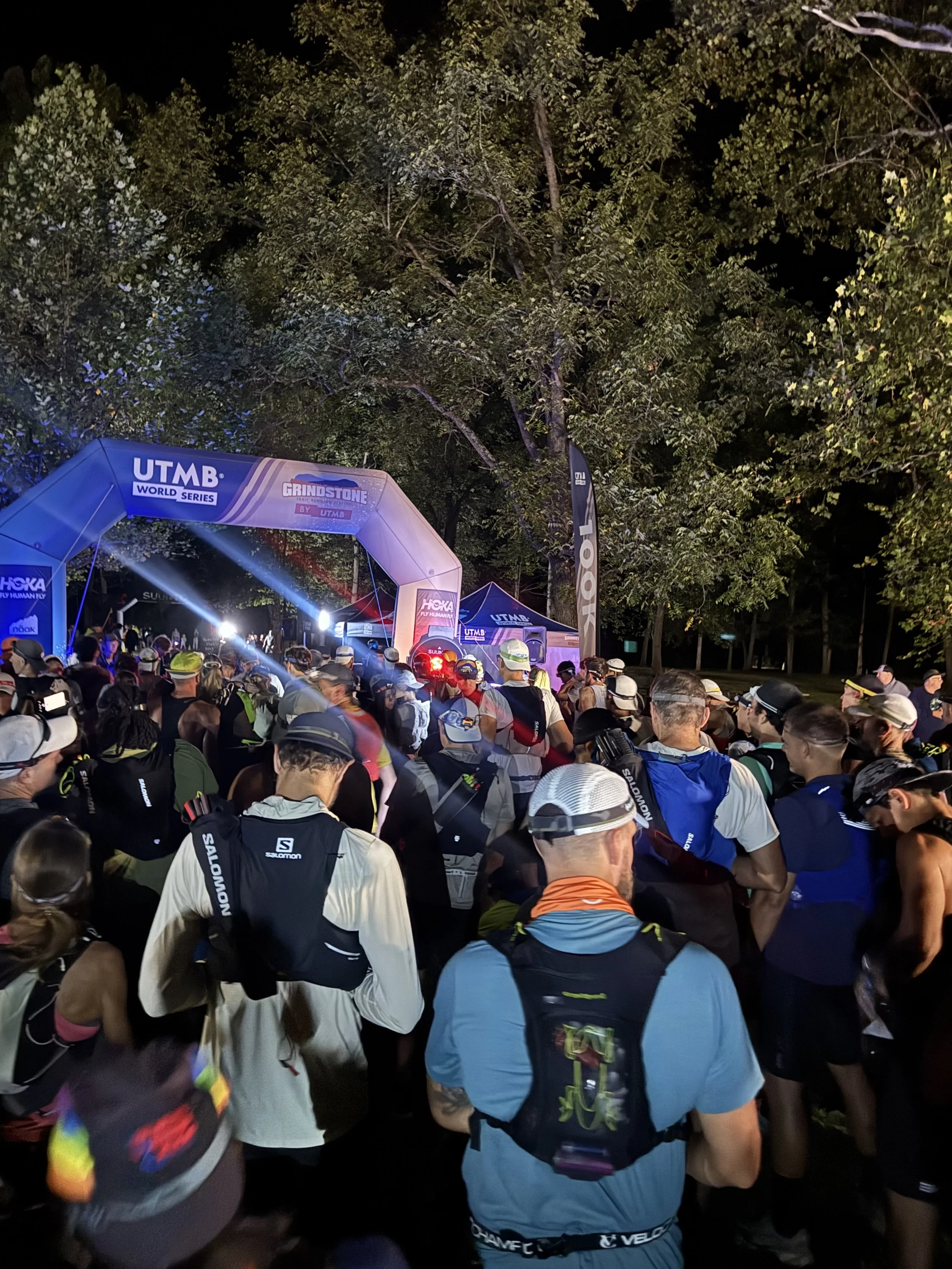
At the starting line of the Grindstone 100K.
Race Day
My alarm went off at 3:15 AM and I began my pre-race routine. The good news was that the headache went away. The bad news was that my body was still feeling a little tired. Like usual, I flipped my mental switch to ignore any doubts or fears or pains.
As I stood at that starting line, I knew the race was going to be a challenge. I’ve done longer distances and greater elevation gain, but today was about overcoming a weak body. Before I knew it, the race director began the countdown for the race. I was off into the darkness with hundreds of other runners.
Start to Lick Run Aid Station
Section Distance: 5.7 miles
Elevation Change: +688 feet/ -282 feet
This first section was a lot of gravel road. It was the perfect way to warm up the legs for some serious climbs later in the race.
The temperatures were cool in the mid 60s, but humidity was very high. It rained the evening before and that left plenty of moisture in the air and ground.
Almost immediately, the run began to feel heavy. I shook it off thinking that it was just my body still waking up.
Throughout the first five miles, I checked my heart rate monitor continuously. I noticed that it was increasing at an unusually fast rate. Could it be the humidity or the running pack weight or my weak body? Was I running too fast? I decided to push forward.
Lick Run to Wolf Ridge Aid Station
Section Distance: 5.7 miles
Elevation Change: +970 feet/ -870 feet
My pace slowed down as I started to run on more technical trail. There were a lot of wet leaves and rocks on the ground. A soft drizzle and fog filled the air. It was a sharp contrast: absolute peace on the outside, and fire alarms screaming inside my body.
I continued to monitor my breathing and heart rate. I could tell it was working overtime on the uphill climbs and even on the flat sections. The first thoughts of dropping out of the race started to pop into my head. This total distance and elevation gain should have felt easy, but it didn’t. There was no way I could keep going in this condition.
However, on the downhill sections I was able to pick up pace with minimal exhaustion. This was the motivation I needed to keep going.
Wolf Ridge to Sand Spring Aid Station
Section Distance: 9.6 miles
Elevation Change: +2,280 feet/ -2,161 feet
This section was the big climb I was focused on for the first half of this race. It was a long distance with a fair amount of elevation gain. I made sure I had enough water and food before heading off up the mountain.
This section was not easy, but it was doable. During the climbs, I was convinced I was going to drop out. On the descents, I was convinced I was going to push to the finish. This back and forth was a mental battle that continued for hours.
There was a long, runnable descent into the Sand Spring aid station. I was crushing that section with high speed and strong legs. I felt good!
Sand Spring to North River Gap Aid Station
Section Distance: 4.2 miles
Elevation Change: +127 feet/ -550 feet
I did a lot of thinking in this short section. With my muscles exhausted, my joints aching, and my nervous system overworked, it was not looking good.
I was heading towards North River Gap (mile 25.2), where my wife, daughter, and in-laws were meeting me. If I were to drop out, this would be the place to do it. Otherwise, I would have to hold out for many more miles.
After much internal debate, I decided to stop at the North River Gap aid station. It was a tough call, but I knew I made the right decision.
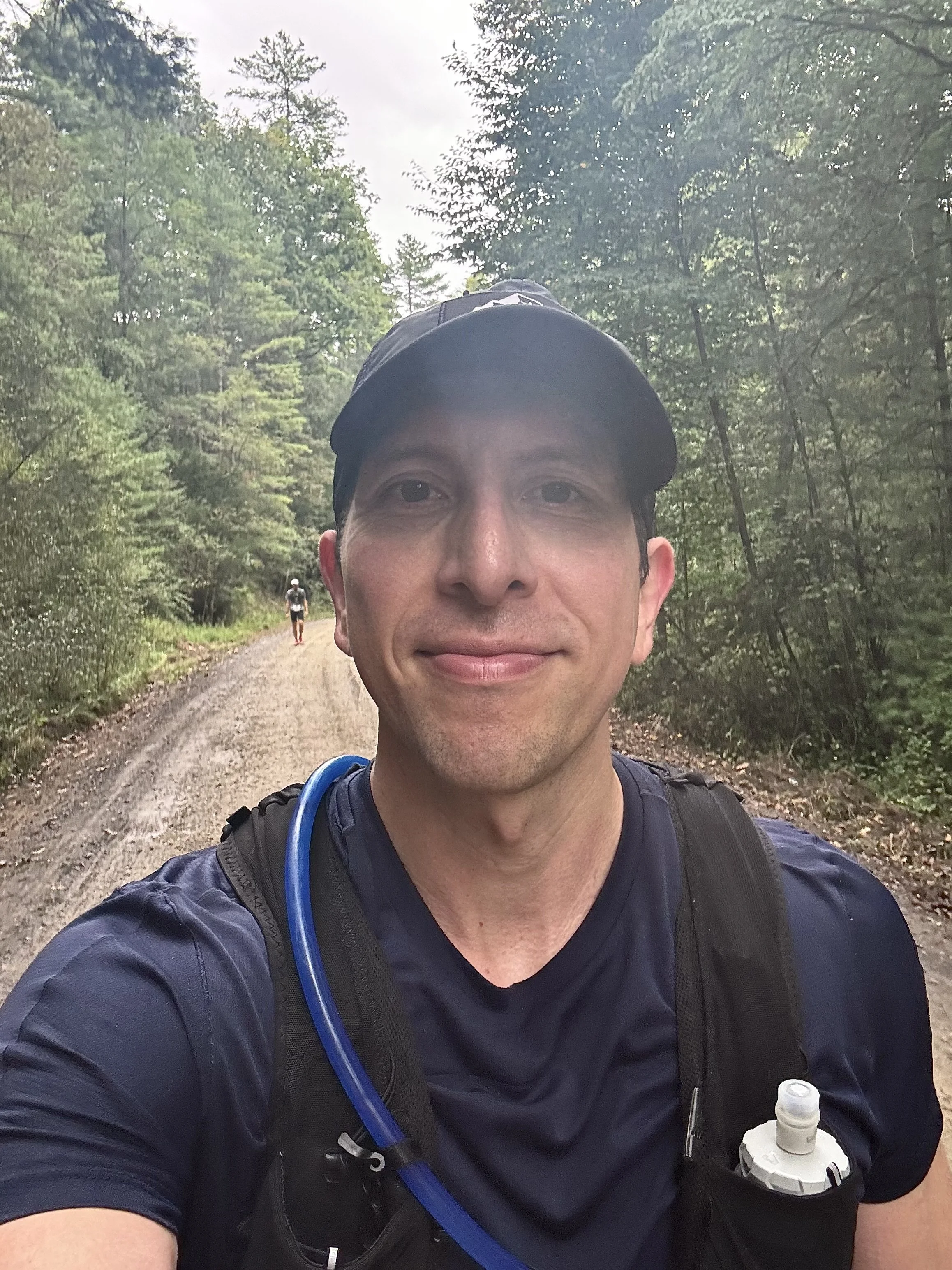
Around mile 23 feeling overworked.
Reasoning Behind My Decision to Stop
As most of you know, the decision to stop an endurance challenge does not come easy. I would happily grind through the pain and push myself to the limit. This time, that approach did not feel right. During that last section of the run, these were the thoughts that were running through my mind.
Medical Complications: Continuing would have put an unhealthy stress on my body. An overworked heart, destroyed nervous system, and potential medical complications were realistic consequences of pushing forward with the race. The last thing I needed was to end up in a medical tent with a heat stroke.
Traumatic Injury: A struggling body leads to very sloppy running form. Add a wet and slippery course to that and I am almost certain to fall down, especially on the downhill sections. A broken leg or arm would be a very realistic outcome.
No Fun: Believe it or not, I actually have fun on these types of races. I enjoy trying a new trail with beautiful scenery. I love the camaraderie of the runners as we push our bodies to our limits. From the very beginning, I was not having fun. I knew this was not a good sign.
Nothing to Prove: I have done tougher races. I had nothing to prove to myself. Sometimes it’s important to push the ego aside to think clearly.
The Bigger Picture: All I could think about was being there for my daughter the next day so we could hike in Shenandoah National Park. This is her first national park. The joy of sharing this experience with my family far outweighs the satisfaction of crossing the finish line.
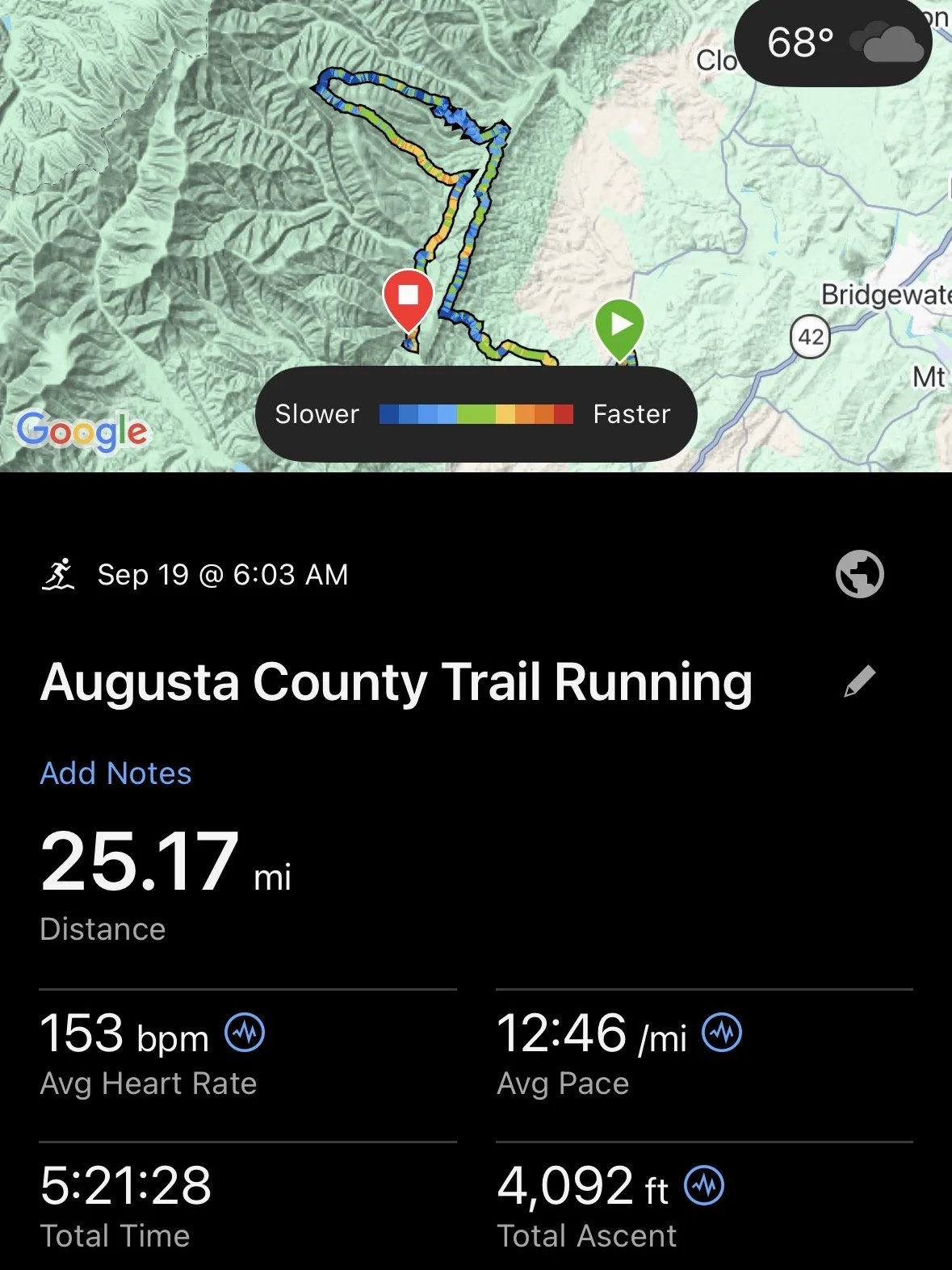
My overall run stats. I was proud of what I could accomplish given the circumstances.
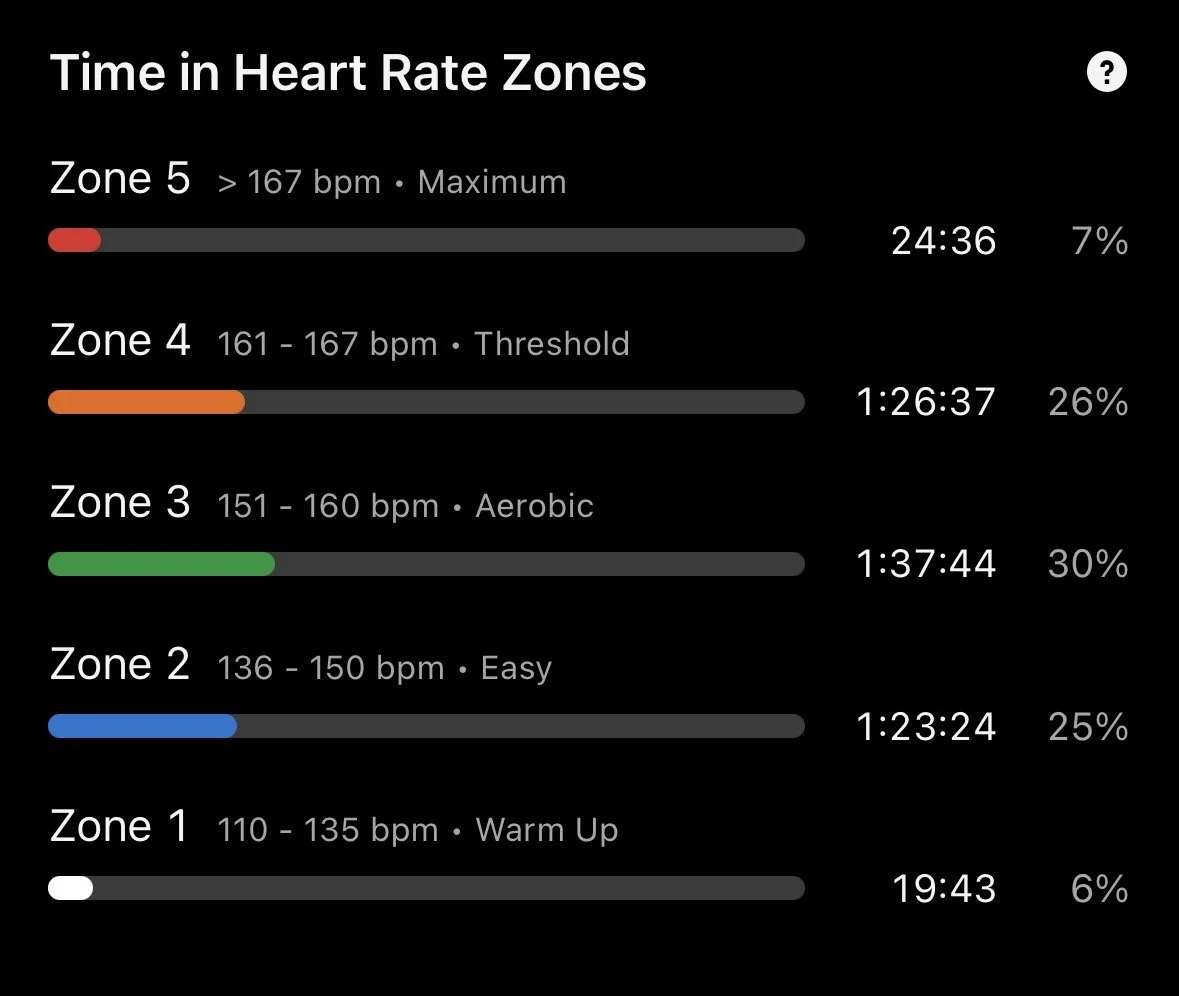
I spent a fair amount of time in zone 4 and 5 heart rate, and minimal time in zone 1. I’m usually in zone 3 during the races. This was a clear sign that something was not right.
What Now?
Right after the race, I enjoyed time with my family in Shenandoah National Park. This thought simply puts a smile on my face.
I learned a few things from this experience.
First, I may need a longer taper to avoid an abrupt drop in running mileage. This will help my cortisol levels transition at a more pleasant pace. Second, I need to reduce the amount of stress right before the race. Planning a family trip around this race did not help. Going forward, separating the two may be a better option.
Lastly, I learned that it’s okay to not push myself to my limits under certain circumstances.
Next up, I’m going to focus on rebuilding muscle and strength. I have a few goals in mind that are outside of endurance training. I’m excited to share this in the near future!